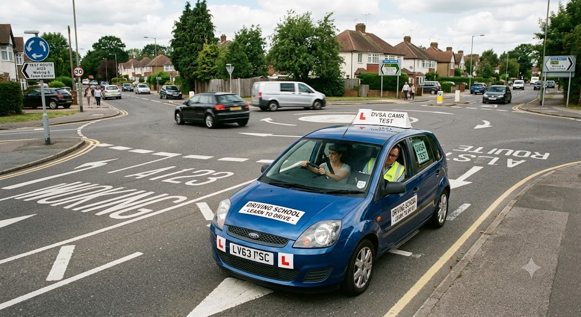
A student of ours once drove the same test route four times during her final week of lessons, and each time she noticed something new, a hidden give-way sign near Trumpington, a junction that always seemed to have a cyclist appear at the wrong moment. Familiarity with local routes genuinely changes how a test feels on the day. Anyone taking driving lessons in Cambridge UK should know the specific quirks of local test routes matter just as much as general driving competence.
Why Route Familiarity Actually Helps
Test centres don’t hide their routes, they’re widely known and publicly discussed, which means learners can prepare for specific challenges rather than facing them cold on test day.
This isn’t about memorising a script. It’s about recognising patterns, awkward junctions, tricky roundabouts, spots where pedestrians tend to cross unexpectedly, so nothing catches you off guard when nerves are already running high.
Common Junction Types Around Cambridge Test Routes
Cambridge’s test routes weave through a mix of residential streets, busier arterial roads, and a handful of genuinely tricky junctions that repeat across multiple routes.
Worth practising specifically:
- Mini-roundabouts in residential areas, where positioning often confuses learners more than full-size roundabouts do
- T-junctions near schools, particularly during pickup and drop-off times when pedestrian activity spikes
- Give-way junctions with limited visibility, common around older parts of the city
Learners who’ve only practised on quiet, predictable roads sometimes struggle the moment a route throws in one of these less obvious junctions.
Roundabout Practice Worth Prioritising
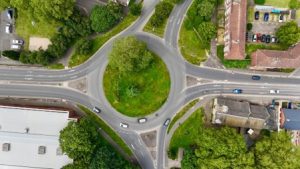
Multi-lane roundabouts show up on nearly every Cambridge test route, and they remain one of the more common sources of test faults across the board.
- Practise lane selection well before reaching the roundabout, not at the last second
- Work on signalling exit intentions clearly, giving following traffic enough warning
- Build confidence judging gaps at busier roundabouts, particularly during weekday traffic
Repeated practice on the same roundabout, rather than avoiding it because it feels intimidating, tends to build the confidence needed to handle it smoothly on test day itself.
Rural Road Sections and Speed Management
Some Cambridge test routes extend briefly onto quieter rural roads just outside the city, and these sections test a different skill set entirely.
- Adjusting speed appropriately for narrower roads with less forgiving margins
- Managing overtaking situations if a slower vehicle appears ahead
- Staying alert for sudden bends or dips in the road that reduce visibility
These stretches often feel easier than city driving initially, right up until an unexpected bend appears and speed hasn’t been adjusted in time.
Dual Carriageway Sections Near the City
Certain routes include a short stretch of dual carriageway, and this section trips up learners who’ve spent most of their practice time in slower, urban environments.
Worth focusing on:
- Building confidence merging at higher speeds without hesitation
- Maintaining safe following distances at increased speed
- Checking mirrors more frequently given the faster pace of traffic
Even a brief dual carriageway section requires genuine comfort at higher speeds, something worth practising specifically rather than assuming general driving skill transfers automatically.
Working With Local Knowledge
Instructors familiar with the exact test routes bring something general practice simply cannot replicate on its own.
Driving instructors in Cambridge who teach specifically on or near actual test routes tend to help learners build genuine familiarity with the exact challenges they’ll face, rather than preparing for driving in general terms alone.
This local knowledge typically includes:
- Awareness of which junctions cause the most faults historically
- Understanding of peak traffic times affecting specific routes
- Insight into subtle route variations examiners sometimes use

Building a Realistic Practice Schedule
Rather than driving randomly around the city hoping to cover useful ground, a structured approach tends to produce better results in less time.
- Dedicate specific sessions to roundabout practice alone, repeating until it feels routine
- Schedule at least one lesson during similar traffic conditions to your actual test time
- Request a mock test covering the exact anticipated route where possible
This focused approach beats general driving practice precisely because it targets the specific challenges test day will actually present, rather than generic road confidence alone.
Getting Genuinely Ready for Test Day
Understanding Cambridge’s test routes, the tricky junctions, roundabouts, rural stretches, and brief dual carriageway sections, prepares learners far more effectively than general practice spread thin across unfamiliar roads. Specific, targeted preparation on these exact challenges builds the kind of confidence that holds up under test-day pressure.
At Driving Lessons Cambridge, we structure lessons around the actual test routes learners will face, ensuring familiarity replaces uncertainty well before test day arrives.
Frequently Asked Questions
Should learners practise on the exact roads used in their driving test?
Yes, where possible. Familiarity with specific junctions and roundabouts on actual test routes reduces surprises and builds genuine confidence for test day.
What’s the trickiest part of most Cambridge test routes?
Multi-lane roundabouts and junctions with limited visibility tend to cause the most faults, making repeated, focused practice on these areas worthwhile.
Do Cambridge test routes include rural or dual carriageway sections?
Yes, several routes briefly extend onto rural roads or short dual carriageway stretches, requiring adjusted speed management and merging confidence.
How can local driving instructors help with route-specific preparation?
Instructors familiar with test routes understand which junctions cause frequent faults and can structure lessons around those exact challenges rather than general practice alone.